
Unit Actions and Unit Activation
Critical Snail Mechanics Monday presents... Actions and Unit Activation
The last time I waxed philosophical on game mechanics it was regarding the benefits of 10-sided dice. If you want to get caught up on our game mechanics blogs you can find that blog here.
Alternating Unit Activation in a tactical table top wargame is better and I will tell you why!
Let's start with an analogy using one of the oldest and simplest games in existence that nearly everyone should have heard of or knows about... CHECKERS! In the game of Checkers, or Draughts as it is known in other parts of the world, each player gets to move a single piece during their turn. What would a checkers game look like if both of the players got to move all of their pieces each turn?
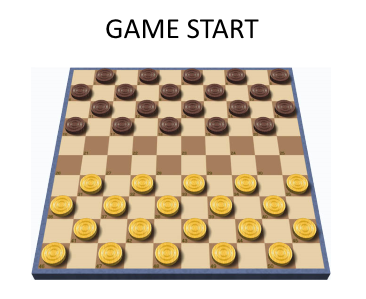
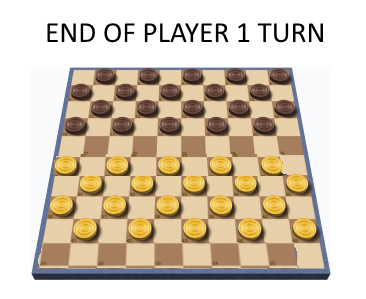
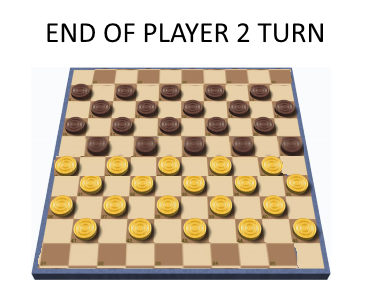
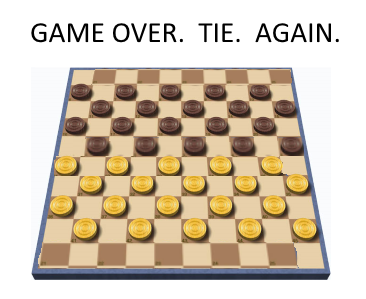
Alright so maybe this analogy was a cheapshot against games that are STILL using an archaic system of allowing a player's entire force to move before even a single unit of their opponent. I don't make any apologies! At the most basic level it should serve to illustrate why such a system is ridiculous in a strategic game.
An alternating system of action also allows players to more fluidly transition between proactive and reactive play styles. Perhaps they thought at first they would control the pace of the game with very aggressive action at the outset but suddenly their opponent throws a wrench into their brilliant plan. The player can now adapt to the enemy more fluidly by activating a unit that they had not initially planned on activating but one that better meets the emerging threat of the enemy's counter move. A game becomes much more about throwing jabs and counter punches, dancing around your opponent and perhaps finding an opening mid game than it does about landing that an apocalyptic haymaker with your gunline on turn one. I've played in game tournaments with players that were nearly ready to throw their dice back in their case and forfeit because they had not won the all-important first turn of the game. When a player's strategy must rely on acting first this is a design flaw.
In the game of Aggressor, each player activates individual units (squads of infantry, vehicles, heroes, etc...) alternatively until all units for all players have acted. Within those activations the unit itself has a multitude of different actions it can take. From the very first moment of the game Aggressor is already giving you twice the tactical choice of a comparable game with a system like we showed above. Your first tactical choice is what unit to activate. In given game circumstances a player may want to activate the unit that is in the most danger first or may want to activate units first that are in relative safety to perhaps force the opponent to activate a key unit of theirs that lies closer to the action. We see these types of tactics even in games of Checkers, players moving a completely safe piece in their back row in order to force their opponent to make a painful move on their turn. All of these choices are taken away in a game where a player may act with all of their units in a single turn because it matters far less what order the player performs the actions in because they are guaranteed action with all of them before suffering the slings and arrows of their opponent.
My absolute favorite reason to alternate by unit between players is that it breaks up the monotony. For unit heavy armies in a game like the Checkers scenario you may be waiting a half hour for your opponent to work through every unit in their army before you can act. Alternating breaks up the action between both players. Less waiting between action. This does a number of things for the players and the game. Less boredorm for the player not currently acting is a given, but also less time to strategize before you're called upon to act and if the player you're playing against does something completely unexpected and then suddenly drops the turn marker in your lap what then? Now you've got to choose between sticking to your carefully crafted plan or understanding that no plan survives first contact and becoming an improv master on the spot. Last, alternating up the action allows the designer (me) to cram more complexity into an individual units action. This is why Aggressor gives a unit multiple choices of what to do in an activation, frankly, we can get away with it. It may take longer per individual unit for action to be resolved in a game of Aggressor versus say a game of Warhammer 40,000 but you won't notice it because you'll be making complex action decisions with one of your units as soon as your opponent wraps up.
In nearly every instance of Aggressor's design we constantly looked back and said "Does this allow the player to make brilliant tactical choices and/or blunders that can be taken advantage of by a brilliant opponent?". I'd confidently say that we hit the mark when it comes to structuring game turns. Agree? Disagree? Tell us how you feel about it on our forums!
This has been a blog.
Rob, The Notorious DEV.